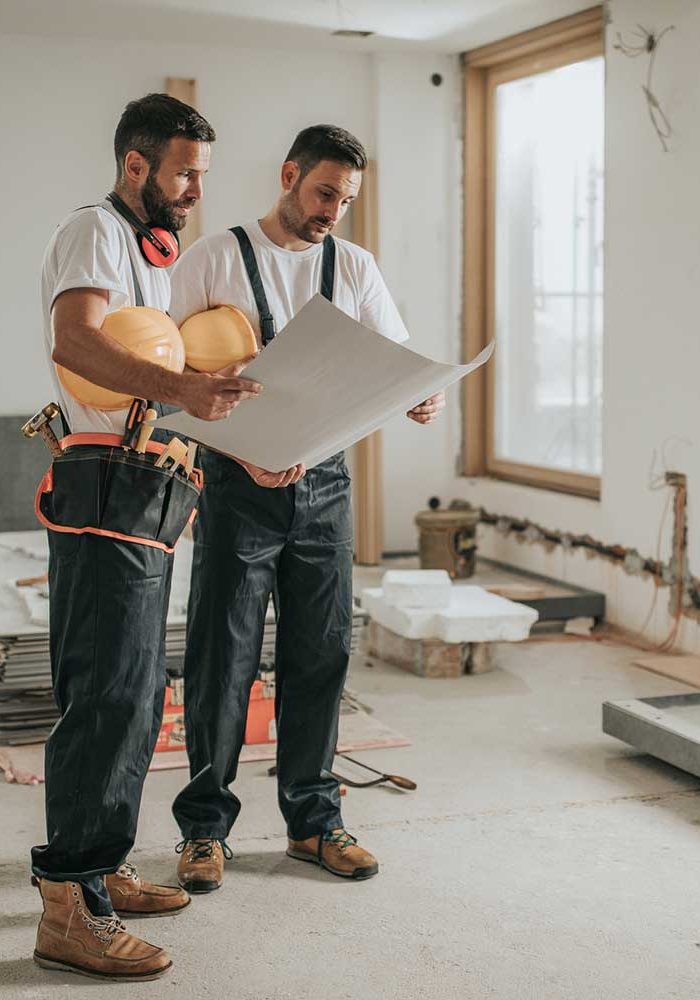
How to get into the career of an insulation contractor?
Let’s now look at what it takes to be an insulation contractor.
Step 1. Complete High School Education
High school graduates or those with equivalent qualifications are preferred by employers. Woodworking, math, geometry, and physics are all high school subjects that will increase your knowledge about isolation concepts.
Step 2: Completion of an Apprenticeship Program
Apprenticeship programs allow for formal education and training. Contractors and unions offer apprenticeships in insulation, including the Partnership of the National Insulation Association and the International Association of Heat and Frost Insulators and Allied Workers. You can search the U.S. Department of Labor regional offices for registered apprenticeships.
Apprenticeships are a combination of classroom instruction and hands-on experience under the supervision of a master insulation worker. After completing the required training, apprentices are awarded journeyman status and receive qualifying marks in an exam.
You should also purchase the tools you need. In some cases, apprenticeships may ask insulation workers to bring their tools. This could include saws, utility knives, kneepads as well as flashlights.
Step 3: Get Licensure
Many states have regulations for contractors in the construction industry and mandate that insulation contractors obtain licenses. Some regulations might restrict licensure to contractors who are required to work for a certain amount of money, offer public insulation services, or specialize in insulation. There are usually no educational requirements to be licensed. However, contractors must pass one or several tests and certain states have separate licensing for residential, commercial, and industrial projects. Although subcontractors may be eligible for coverage under the general contractor’s license, they might need their own insurance and license.
Step 4: Get Certification
Specialized training and advanced education can increase opportunities for insulation workers to advance. Accreditation by the National Center for Construction Education and Research is given to programs in construction that comply with industry and professional standards. Training for insulators who work with asbestos is required by the U.S. Environmental Protection Agency. Each state offers training courses that must comply with EPA guidelines.
The NIA provides training for Certified Insulation Energy Assessors. This is a profession that can calculate energy savings and determine the optimal thickness of insulation. North American Insulation Manufacturers Association offers training in fiberglass duct installation and fabrication.
Additional training might be an option. Some organizations offer programs to teach workers about safety and tools.
For career advancement, it is essential to continue education. Re-certification is required for most certifications every couple of years. Insulation workers need to complete diverse tasks in order to maintain their certification. These may include:
- Passing another exam.
- Submitting a Work Appraisal.
- Paying a fee
Recall that insulation contractors can earn approximately $41,327 per year after completing an apprenticeship.
Why is a professional insulation contractor better than a general contractor?
Do you want to insulate your business or home but are unsure if it is best to hire an insulation contractor?
There are several ways you can distinguish between these two choices. Continue reading to find out why you should hire an insulation specialist.
You can avoid lawsuits by safely removing old insulation
When you need insulation to be installed, fixed, or removed it is important that you understand the type of material being removed. Professional insulation contractors are trained to handle asbestos issues. Tenants and families can be affected by asbestos if it isn’t handled properly. Microorganisms such as black mold are another major health concern that insulation can cause. This situation can lead to health problems for long-term occupants if it is not handled properly by a handyman.
Long-term savings by preserving utilities
Insulation is necessary for any property, whether it is a house or a business. This is to reduce utility costs. Sometimes the difference can be quite significant. However, hiring a professional will help you maximize savings by being able to give you the right type of insulation for your house. A professional will seal it properly, which will result in long-term savings.
Your business can maximize rebates
Rebates from the government may be available to homeowners and business owners alike. These rebates include federal tax credits that can be used to improve consumer energy efficiency. Specialized contractors in insulation know which types of insulation are eligible to receive money from the government.
How do you evaluate and select a professional insulation contractor?
You have many options when choosing an insulation contractor. Follow our advice and ask 8 questions:
1. Do you have a license to work as a contractor?
To protect the reputation of the contractor, a license is mandatory. Contractors must also be licensed for certain insulation materials.
2. What is your experience in the field?
A contractor who has less than five years of experience is not recommended as they may not have successfully implemented other projects.
3. Which guarantee/warranty are you willing to provide for insulation solutions?
Two phases make up security for insulation projects. This first phase is for guaranteeing the labor and product, while the second covers the final insulation product.
4. Which personal protection equipment should you provide your employees?
All insulation work requires personal protective equipment (PPE). Safety glasses, helmets, ventilation equipment, and safety glasses are all essential equipment. Ladders and any other equipment that could be used to protect workers during construction must also be prepared. In addition, contractors should also have adequate workers’ insurance.
5. Which insulation products do you offer?
Good contractors will offer a wide range of insulation products and options. They will tailor a plan to fit your specific situation.
6. What is the time frame for the assessment?
Contractors must evaluate the building and its construction thoroughly in order to construct accurately and efficiently. You should also consider how their review may impact your progress.
7. Which insulation type do you recommend?
Many insulation materials are available. Their cost, performance, and characteristics are all different. Contractors should explain the reasons they selected a specific material to be used in your project.
8. What is the estimated time- and cost of this project?
In the estimate, the time required to finish the job and the costs should be clearly stated. Both parties must discuss any contingencies that may arise in the form of expenses or time.
Average Home Insulation Costs
Home insulation costs range from $3,000 to $10,000 for a home with 2,000 square feet, or $1.50 to $5.00 per foot.
At the same time, the cost of insulation for your home can vary depending on many factors, including where it is located, what type of insulation you choose, how old your house is, as well as the labor cost in your local area.
To make it easier to estimate the cost, the dimensions have been converted into square feet. You can expect to pay higher or lower depending on how much insulation is required. Costs are calculated at $2.00 per square foot.