Breaking down construction costs by state - Factors affecting construction estimating
Construction is a complex process that requires sourcing materials, securing permits and equipment, paying your crew, and creating and executing plans and blueprints. All these not only take time but also cost lots of money. However, estimating how much you may be spending on a project – right from foundation to finish, planning, and execution, b- becomes a vital step
Moreover, estimating construction project costs also helps raise funds required as you will know how much you may be spending for the different aspects. Various construction estimating techniques help come up with better and more accurate estimates and possibly even cut costs.
However, before that, you ought to know what construction estimating is and how it can help you come up with precise estimates for your projects.
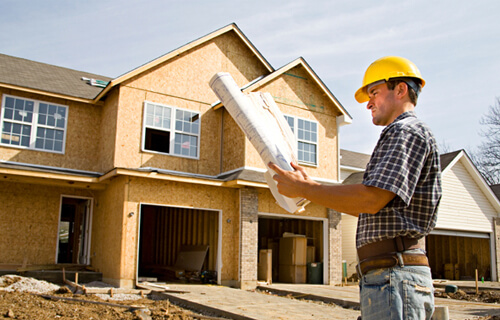
Understanding construction estimating
Construction estimating is a process that helps assess the different costs involved in planning and executing construction projects, including
- Direct costs
- Indirect costs
- Labor costs
- Subcontractor costs
- Overhead costs
- Profit margins
The process involves creating a construction estimate – a document handy for bidding on projects. Construction estimates forecast how much the project may cost and is vital to the construction project management process that allows contractors to manage the different aspects such as labor and material supply.
Using relevant data to estimate costs early on can be crucial to bidding on and taking on high projects and increasing your credibility and reputation as a builder.
Best practices for estimating construction cost
Accurate estimates vouch for more successful project execution. However, while you can’t work out an exact amount, these techniques can help improve the accuracy of your forecasts.
Know Customer Expectations
Before coming up with an estimate, you might want to show your customers the plan and its execution and get their nods. Letting your clients know about the project and its implementation can eliminate any misinformation and misunderstandings that may add to your expenses.
Use Unit Cost Techniques
There are many techniques in construction estimating. However, the unit cost method is as fast and accurate as the popular ones like the Stick method, as every step comes with a unit price, which you will need to add to get the final estimate.
Seek Expert Advice
You may be an expert on several aspects of construction, but there may be other areas where you may need professional help. So, when working out project costs, you might also want to get some input from someone well-acquainted with the process – preferably from bookkeeping.
Don’t Forget to Consult with Suppliers
You also ought to establish good relationships with your suppliers as they can give you valuable inputs and insights about your estimates – particularly regarding the resources and their utilization.
Estimating building construction cost
Estimating building construction costs helps plan and execute your projects accurately and can significantly influence their success. Keeping that in mind, you should consider a few benefits of construction estimation.
- Construction estimation helps plan and implement the tasks and subtasks and increases profit margins.
- Estimating construction costs also helps allocate and manage resources more efficiently and complete projects on time.
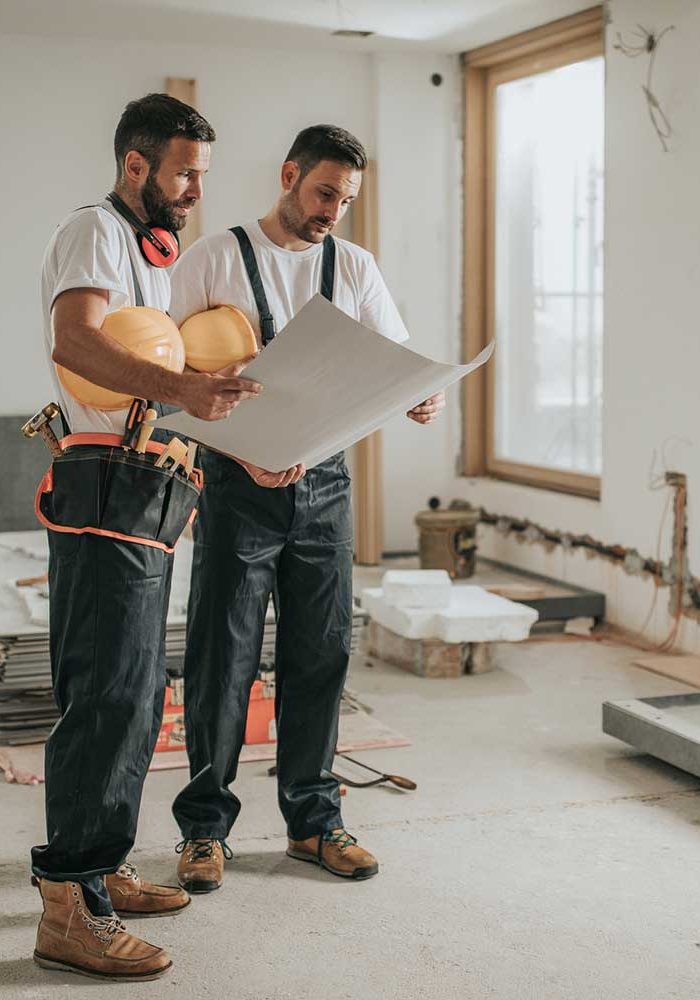
Construction cost estimation requires a thorough understanding of the building construction process and may involve the following steps.
1. Identifying the estimation method
The first step towards estimating construction costs should be to zero in on an estimation method – especially one that aligns with the project scope and schedule, which may include the type and complexity of the design and the criteria.
2. Preparing the base estimate
The base estimate is the initial project cost and covers scope, size, and complexity. Base estimates are the foundation for detailed cost breakdowns, which depend on the unit costs, material costs, inflation rates, and market conditions.
3. Reviewing estimate
You not only need to prepare the base estimate but also have someone – preferably an expert, review it to ascertain if all the assumptions are correct and within the scope of the project. Reviewing your base estimates also helps ensure that you don’t miss out on an item or component and meet project-specific conditions or requirements, such as location and productivity.
4. Identifying and mitigating risks
Risks and contingencies are integral to construction project management, and sorting them out should be an ongoing process to maximize and, more importantly, capitalize on relevant opportunities. Risk mitigation also helps identify and thwart possible threats and hazards that can adversely impact the total project cost.
5. Communicating the estimates
You will also need to convey your estimates and share the data gathered to seek peer reviews or second opinions. Project managers can review construction cost estimates and suggest changes if required before incorporating them into the baseline.
Construction project cost estimation is an ongoing process where you must keep your peers and subordinates in the loop at every step to achieve the desired outcome. Accuracy also matters to a considerable extent here, since errors in your estimates can escalate the different components such as labor and material costs.
Construction cost percentage breakdown
Building construction costs involve several aspects, including labor and material. Besides this, you will also need to pay to get the materials to the sites. Accounting, legal, and administrative costs and charges for setting up and operating offices comprise a significant portion of the total expenses.
However, you can get the average distribution by breaking down the total cost into eight broad aspects, as you can find in the following table.
Sl. No. | Cost Breakdown | Average Distribution |
1. | Site work | 6.2% |
2. | Foundation | 11.8% |
3. | Framing | 17.4% |
4. | Exteriors | 14.1% |
5. | Installations | 14.7% |
6. | Interiors | 25.4% |
7. | Finishes | 6.8% |
8. | Miscellaneous | 3.8% |
Construction cost per square foot
The average construction cost per square foot varies depending on the building size, locality, or state, but is usually between $9.1 and $12.5.
Installing the stud frame may cost between $24 and $43, while you may spend between $22 and $38 for the tilt-up. Similarly, steel frames can cost you between $10 and $20, and you may be shelling out between $3, and $5, to get them installed, taking the total cost to between $13 and $25.
Other costs may include those incurred for getting the materials to the site, which may make up for 5% to 10% of the total cost, and installing windows, doors, and other such elements, which may amount to between 10% and 30%, not to mention, laying the foundation, which may be between $5, and $10 per square feet.
Conclusion
Building construction costs vary by state and country and may involve additional charges. For instance, when sourcing the materials, you may need to pay for customizing your buildings since you mostly get only standard elements. Broker charges are another essential aspect of construction costs, although you can bargain to get the best prices.
So, when working out construction costs, don’t forget to pay attention to these charges, as they help complete projects at the best prices and on time.